

AV Systems for Government Buildings: Compliance, Security & Reliability
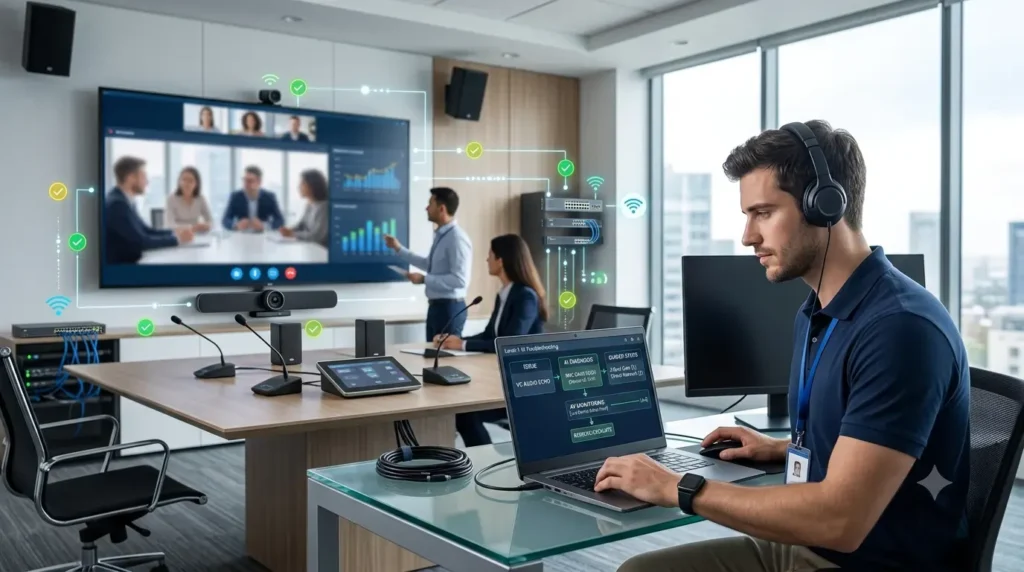
Government meetings leave little room for “the screen worked yesterday.”
When an AV system fails in a government building, the impact can go beyond an inconvenient meeting. Poor audio can affect accessibility. A failed display can interrupt an important briefing. An improperly secured device can introduce technology, network, or privacy concerns.
That is why AV systems for government buildings require careful planning around security, compliance, reliability, accessibility, monitoring, and long-term support.
The goal is not to install the most complicated AV system available. It is to create a dependable environment that supports the building’s purpose, users, IT policies, security requirements, and future needs.
Key Considerations for Government AV Systems
Before selecting AV equipment, government organisations should consider:
- Security and access requirements
- Applicable laws, standards, and internal policies
- Network architecture
- Room functionality
- Accessibility
- Reliability and redundancy
- AV monitoring
- Commissioning and documentation
- Maintenance and lifecycle planning
These considerations should influence the AV design from the beginning rather than being added after installation.
Government AV environments can also be connected to wider IT infrastructure. NIST takes a risk-based approach to information and system security, including consideration of confidentiality, integrity, and availability. This provides a useful framework for understanding how connected AV technology should be assessed within an organisation.
Why AV Systems for Government Buildings Need Careful Planning
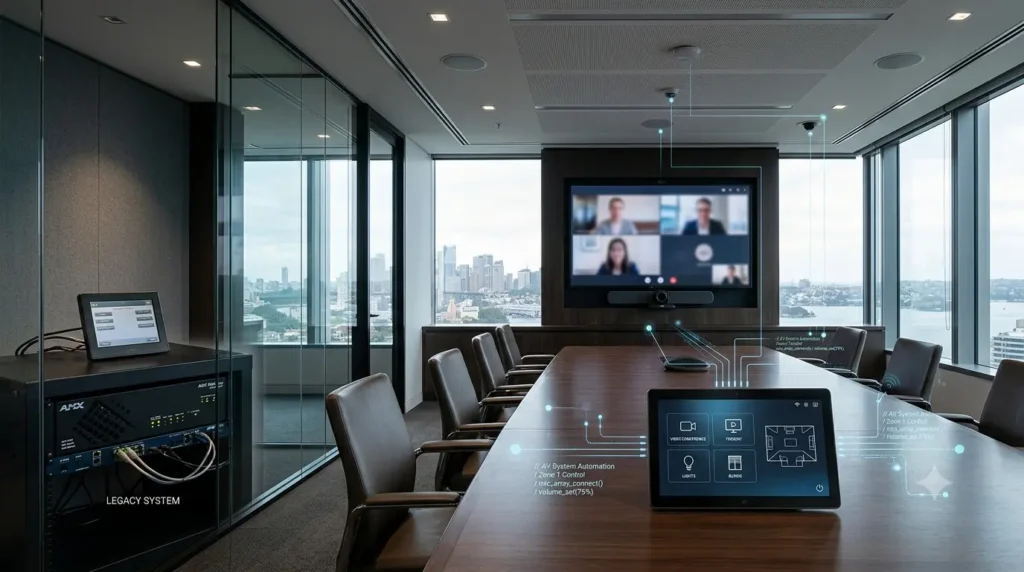
Government facilities can include council chambers, courtrooms, public meeting spaces, executive boardrooms, training rooms, briefing rooms, conference rooms, and control centres.
Each environment has different requirements.
A public meeting room may prioritise clear speech, presentation sharing, captioning, and accessibility. An executive boardroom may require advanced conferencing and room-control capabilities. A facility handling sensitive discussions may require additional security controls based on the organisation’s policies.
There is no single government AV system that works for every facility.
The AV solution should reflect:
- How the room will be used
- What information is being handled
- Who will use the system
- How users will access the technology
- How the AV system connects to the network
- What security and IT requirements apply
- How the system will be supported over time
A well-planned AV environment starts with these requirements before equipment is purchased.
Compliance Should Begin With AV Design
Compliance should not become a last-minute checklist before project handover.
The applicable requirements depend on the country, government organisation, facility, and type of information or activities involved. Federal, state, and local organisations may have different obligations.
For this reason, AV teams should identify applicable requirements before equipment selection and installation.
A well-planned government AV project should document:
- Applicable regulations and standards
- Internal security policies
- Network requirements
- User-access requirements
- Equipment locations
- Data and connectivity considerations
- Testing requirements
- Commissioning procedures
- Maintenance responsibilities
This creates a traceable design process and makes it easier for IT, facilities, security, and AV teams to understand how the system is intended to operate.
Rather than describing an AV product as simply “government compliant,” organisations should identify the specific requirements that apply to their environment and verify the system against those requirements.
That distinction matters.
AV Security Is More Than Protecting the Equipment Rack
A locked equipment rack is useful, but it is not the entire security strategy.
Modern government AV systems can include network-connected displays, cameras, microphones, control processors, conferencing systems, computers, media players, and other devices.
As AV technology becomes more connected, organisations need to consider how these devices fit into the wider IT and cybersecurity environment.
NIST SP 800-53 provides security and privacy controls covering areas such as access control, system and communications protection, configuration management, and physical and environmental protection.
For government AV environments, practical security considerations can include the following.
Network Architecture
AV devices should be connected according to the organisation’s approved network architecture.
Where appropriate, network segmentation and access restrictions can help limit unnecessary communication between systems. The correct implementation should be determined by the organisation’s IT and cybersecurity teams rather than by applying a generic AV template.
User Access
Not everyone who can operate a meeting room needs administrator privileges.
User permissions should match job responsibilities, while administrative access should remain limited to authorised personnel.
This can help reduce unnecessary access and make system administration easier to manage.
Device Configuration
Default credentials, unnecessary services, outdated firmware, and poorly managed configurations can create avoidable security concerns.
AV equipment should therefore follow the organisation’s approved configuration and security processes.
Regular review of device configurations can also help organisations maintain a more manageable AV environment.
Physical Security
Critical AV equipment may require physical protection depending on the facility and the sensitivity of its use.
Control processors, network equipment, computers, and other infrastructure should be located and protected appropriately.
Security works best as a series of sensible controls rather than one magical checkbox.
Reliability Matters When Meetings Cannot Simply Stop
Government facilities often support public meetings, presentations, training sessions, executive meetings, and important internal communications.
When an AV system fails, the meeting may still have to continue.
Reliable AV design for government facilities starts with understanding how the room will actually be used.
This can include:
- Correct display selection and placement
- Appropriate microphone coverage
- Suitable loudspeaker design
- Reliable signal distribution
- Proper control-system programming
- Network planning
- Cable management
- Equipment ventilation
- Appropriate backup strategies
- Complete system testing
Reliability also depends on what happens after installation.
A system can be professionally installed and still become difficult to manage if nobody maintains it. That is where AV monitoring and lifecycle planning become important.
AV Monitoring Helps Teams Detect Problems Earlier
Large government organisations may operate multiple meeting rooms and facilities.
Without central visibility, support teams may only discover an issue when an employee reports that a display, processor, or other device is not working.
AV monitoring can give technical teams visibility into supported equipment and system status.
Depending on the monitoring platform and configuration, organisations may be able to monitor devices such as:
- Displays
- Projectors
- Control processors
- Amplifiers
- Network-connected AV equipment
- Other supported room technology
The objective is not to monitor every device simply because monitoring exists.
The objective is to identify the equipment and conditions that matter most and provide useful information when something requires attention.
This supports a shift from reactive AV support toward more proactive AV management.
And discovering that a conference-room display has failed before the meeting starts is generally much more useful than discovering it when everyone is already sitting down.
Standardisation Can Simplify AV Management
A government organisation with multiple buildings can eventually accumulate a surprisingly diverse collection of AV equipment.
One room may use one control system. Another may have a completely different interface. A third may contain equipment that nobody remembers purchasing.
This can make support unnecessarily complicated.
Where practical, standardisation can simplify:
- User training
- Troubleshooting
- Spare equipment management
- Documentation
- Maintenance
- Monitoring
- Support procedures
- Future upgrades
Standardisation does not mean every room needs to be identical.
A council chamber and a small meeting room have different requirements. However, organisations can still standardise design principles, control approaches, documentation, equipment categories, and support processes.
The result is a more predictable and manageable AV environment.
Accessibility Should Be Built Into AV Design
Government facilities serve employees, visitors, community members, and other users with different needs.
Accessibility should therefore be considered during the AV planning and design process.
Depending on the facility and applicable requirements, this can include:
- Clear speech reproduction
- Captioning
- Hearing assistance
- Accessible control interfaces
- Readable information on displays
- Appropriate room layouts
The exact requirements depend on the relevant jurisdiction, building, and organisation.
The principle is straightforward: an AV system should help people participate rather than create another barrier.
Commissioning Proves Whether the AV System Works
Installation is not the end of an AV project.
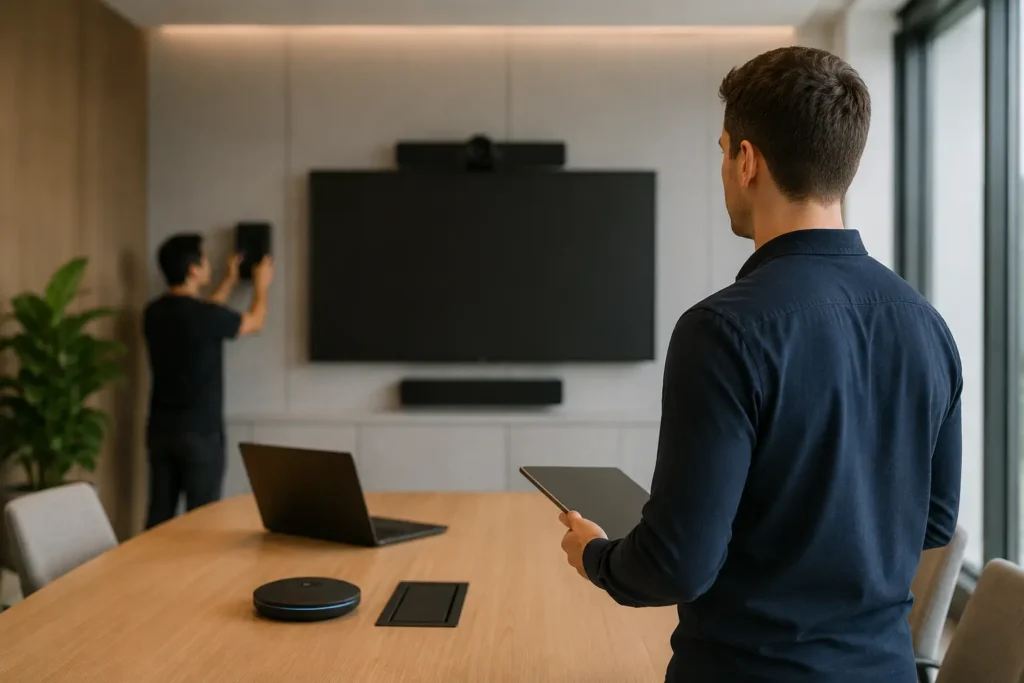
AV commissioning provides an opportunity to test the completed system under realistic operating conditions before handover.
A proper commissioning process can include:
- Testing displays and signal paths
- Checking microphone coverage
- Testing audio performance
- Verifying control functionality
- Testing conferencing systems
- Checking network connectivity
- Confirming device configurations
- Testing automated functions
- Recording faults and corrections
- Completing system documentation
The commissioning process should also leave the organisation with useful records.
Good documentation helps future technicians understand how the system was designed, configured, connected, and tested.
That can save considerable time when troubleshooting problems or planning future upgrades.
Government AV Systems Need Lifecycle Planning
AV equipment does not last forever.
Displays age. Projectors require maintenance. Control processors become outdated. Software changes. Security requirements evolve. Rooms get redesigned.
That means government organisations should consider the full AV system lifecycle rather than treating installation as a one-time purchase.
A practical lifecycle can look like:
Design → Procurement → Installation → Commissioning → Monitoring → Maintenance → Upgrade → Replacement
Lifecycle planning helps organisations determine when equipment should be repaired, upgraded, or replaced.
It can also reduce the risk of relying on technology that has become difficult to support.
The cheapest decision today is not necessarily the cheapest decision over the life of the system.
How to Build a More Reliable Government AV Environment
A dependable government AV environment does not necessarily require the largest equipment list.
Instead, focus on the fundamentals.
1. Define the Room’s Purpose
Understand what meetings, presentations, collaboration, public activities, or other functions will take place in the space.
2. Identify Applicable Requirements
Work with the appropriate IT, security, facilities, accessibility, and compliance teams to determine which requirements apply.
3. Design Before Purchasing
Equipment should support the approved AV design rather than drive it.
4. Integrate the Technology Properly
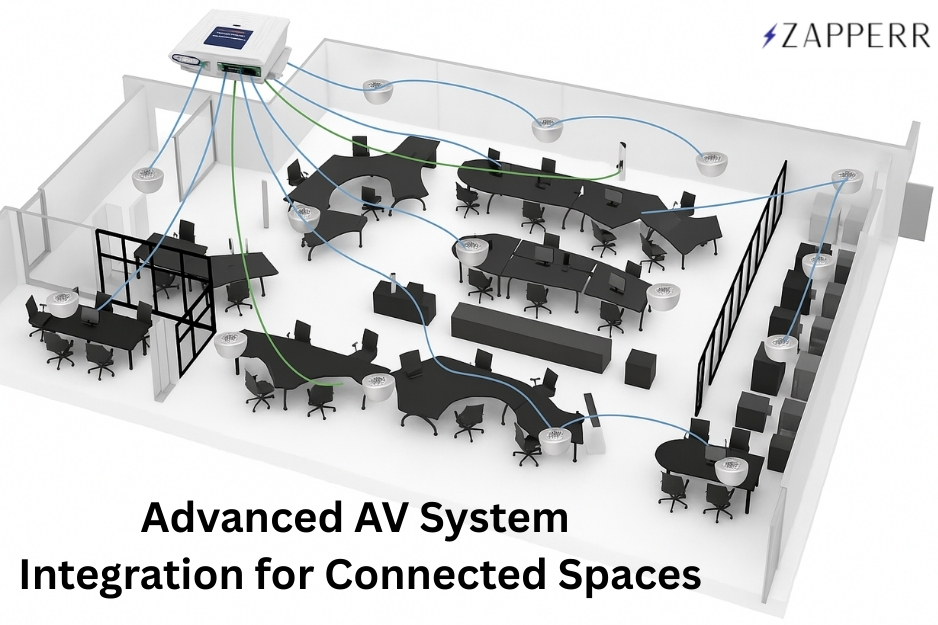
Displays, audio, control systems, conferencing technology, networks, and other components should work together as one environment.
5. Test Before Handover
Commission the system and test realistic user scenarios before the system enters normal operation.
6. Document Everything
Keep useful information about equipment, configurations, connections, programming, testing, and support procedures.
7. Monitor Where It Makes Sense
Use AV monitoring to provide visibility into important systems and identify issues that require attention.
8. Plan for Replacement
Consider equipment lifecycle, supportability, software, security requirements, and future room needs.
Benefits of a Well-Planned Government AV System
A properly planned AV environment can provide benefits beyond better meetings.
It can help organisations achieve:
- More reliable meeting rooms
- Better visibility into AV equipment
- Easier troubleshooting
- More consistent user experiences
- Better accessibility
- Clearer documentation
- More predictable maintenance
- Better lifecycle planning
- Improved coordination between AV, IT, facilities, and security teams
The exact benefits will depend on the organisation, facility, technology environment, and operational requirements.
Frequently Asked Questions About Government AV Systems
What should government organisations consider when planning an AV system?
Government organisations should consider security, applicable requirements, network architecture, room functionality, accessibility, reliability, monitoring, commissioning, documentation, maintenance, and equipment lifecycle.
How can AV systems in government buildings be secured?
Security can include appropriate network architecture, access controls, device configuration, firmware management, physical protection, and alignment with the organisation’s wider IT and cybersecurity processes.
Why is AV monitoring important for government facilities?
AV monitoring can provide visibility into supported equipment and help technical teams identify issues before they disrupt meetings or other activities.
Why is AV commissioning important?
Commissioning allows the completed system to be tested under realistic conditions. It can identify faults, verify functionality, confirm configurations, and provide useful documentation before handover.
Should every government meeting room use the same AV equipment?
Not necessarily. Different rooms have different purposes and requirements. However, organisations can standardise design principles, documentation, control approaches, equipment categories, and support processes where practical.
How often should government AV equipment be replaced?
There is no single replacement schedule for every government AV environment. Organisations should consider equipment age, supportability, software, security requirements, reliability, maintenance costs, and changing room requirements when planning upgrades or replacement.
Need Reliable AV Systems for a Government Facility?
Government AV requires more than selecting displays, microphones, speakers, and control equipment.
Zapperr AV can help organisations approach AV projects through careful design, integration, commissioning, monitoring, and lifecycle planning.
If you are planning a new government meeting room, upgrading an existing facility, or looking for a more reliable way to manage multiple AV environments, speak with an AV specialist about your requirements.
Final Thoughts
AV systems for government buildings need to balance usability, security, compliance, reliability, accessibility, and long-term support.
The best system is not necessarily the one with the most equipment or the longest specification sheet.
It is the system that fits the facility, supports its users, works within the organisation’s technology environment, meets applicable requirements, and remains manageable over time.
For government organisations, AV should be treated as part of the wider technology and facilities strategy—not simply as a collection of screens, microphones, speakers, and control panels.
When AV design, integration, security, monitoring, commissioning, and lifecycle planning work together, government facilities can create meeting and collaboration environments that are dependable, secure, accessible, and easier to manage.
In government AV, boring is often a compliment.
If the meeting starts on time, everyone can hear, the presentation appears, the controls work, and nobody has to crawl behind the display looking for a missing cable, the AV system is doing exactly what it should.
AV Systems for Government Buildings: Compliance, Security & Reliability Read More »