

AV commissioning

What Does an AV Project Manager Do in Australia? A Complete Guide for Businesses
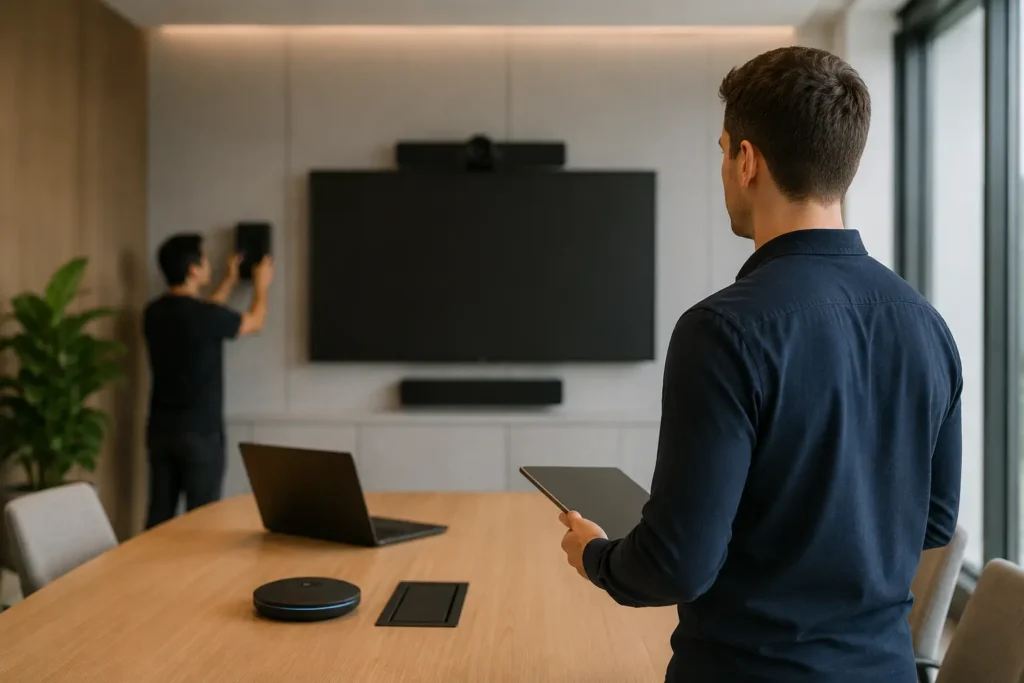
AV project manager supervising a modern conference room AV installation with display screens, video conferencing equipment, and enterprise meeting room technology in Australia.

An AV project manager in Australia oversees the planning, coordination, installation, and delivery of audiovisual systems for businesses, universities, hotels, and enterprise environments. They manage timelines, contractors, AV integrators, IT teams, and system commissioning to ensure AV projects run smoothly, stay within budget, and deliver reliable user experiences.

Why AV Project Management Matters More Than Ever

Modern workplaces depend heavily on technology.

Meeting rooms now include video conferencing platforms, wireless presentation systems, smart cameras, DSP audio processing, room scheduling panels, and cloud-connected AV monitoring tools. What once involved a projector and a speakerphone now looks more like an IT infrastructure project.

That complexity creates one major challenge:
Who keeps everything organized?

This is where an experienced AV project manager Australia businesses rely on becomes essential.

Without structured audiovisual project management, even premium AV technology can quickly become a frustrating experience. Delayed hardware, poor coordination, incompatible systems, and installation mistakes often create expensive problems long after the project goes live.

According to AVIXA, modern AV environments increasingly combine audiovisual, networking, cloud collaboration, and automation technologies into a single connected ecosystem. As systems become more integrated, professional project management becomes critical for successful delivery.

Or, to put it another way:
Someone needs to stop the electricians, programmers, and IT teams from blaming each other before the first meeting even starts.

What Is an AV Project Manager?

An AV project manager oversees the entire lifecycle of an audiovisual project.

They coordinate people, technology, schedules, budgets, and technical workflows from the initial planning stage through final system handover.

An AV project manager typically works with:

  • Clients and stakeholders
  • AV consultants
  • AV integrators
  • IT departments
  • Construction contractors
  • Programmers
  • Manufacturers
  • Facility managers

Their job is not simply “managing screens and speakers.”

They ensure all moving parts work together efficiently while keeping projects on time and aligned with business goals.

What Does an AV Project Manager Actually Do?

1. Planning the AV Project

Every successful AV deployment starts with proper planning.

Before equipment gets ordered or installed, the AV project manager helps define:

  • Project scope
  • Business requirements
  • Technical goals
  • User expectations
  • Room functionality
  • Budget limitations
  • Installation timelines

For example, a corporate boardroom requires different AV functionality compared to:

  • University lecture theatres
  • Hotels and event venues
  • Healthcare environments
  • Government facilities

A well-planned AV system improves usability, scalability, and long-term reliability.

Poor planning usually leads to sentences like:
“We forgot to allow space for the equipment rack.”

That sentence alone has probably aged thousands of project managers worldwide.

2. Coordinating AV Design and Technical Teams

Modern AV deployments involve multiple specialists.

An AV project manager coordinates communication between:

  • AV designers
  • Electrical contractors
  • Network engineers
  • AV programmers
  • IT departments
  • Construction teams

This coordination helps avoid conflicts during installation.

For example:

  • Display placement affects room visibility
  • Audio system tuning affects speech clarity
  • Network infrastructure affects AV-over-IP performance
  • Collaboration platforms affect meeting workflows

According to Microsoft Teams Rooms Planning Documentation, successful meeting room deployments require careful planning across networking, room design, device compatibility, and user experience.

An experienced AV consultant Australia businesses trust often works alongside the AV project manager during this stage.

3. Managing Equipment Procurement

Enterprise AV projects rarely involve one manufacturer.

A single deployment may include:

  • Q-SYS DSP systems
  • Crestron control systems
  • Extron switching hardware
  • Shure microphones
  • Samsung displays
  • Logitech conferencing devices

The AV project manager helps ensure:

  • Equipment compatibility
  • Correct procurement timing
  • Budget alignment
  • Supplier coordination
  • Delivery scheduling

This role became even more important after global supply chain disruptions increased lead times across the technology industry.

Because discovering a six-week delay on a critical device one day before installation is not exactly ideal project planning.

4. Overseeing AV Installation

Once installation begins, coordination becomes critical.

The AV project manager monitors:

  • Site readiness
  • Cable infrastructure
  • Installation progress
  • Device mounting
  • Rack builds
  • Safety compliance
  • Contractor scheduling

This stage often determines whether projects stay on time or spiral into delays.

Strong audiovisual project management helps businesses reduce:

  • Downtime
  • Scheduling conflicts
  • Installation errors
  • Rework costs
  • Communication breakdowns

Good AV systems should feel invisible to users.

If employees spend ten minutes trying to share a screen during every meeting, the technology failed its purpose.

5. Coordinating AV Programming and System Testing

Modern AV systems rely heavily on software and automation.

AV programmers configure systems such as:

  • Touch panel interfaces
  • DSP audio processing
  • Device control automation
  • Video routing
  • Room scheduling integration
  • Collaboration platform workflows

The AV project manager coordinates programming timelines and system testing before deployment goes live.

Testing usually includes:

  • Audio quality checks
  • Video signal validation
  • Microphone testing
  • Network performance checks
  • User workflow testing
  • Remote monitoring validation

According to Q-SYS and Crestron Electronics, enterprise AV systems increasingly depend on network-based control, automation, and centralized management platforms.

That means AV project management now overlaps heavily with IT operations.

6. Managing Commissioning and Final Handover

Commissioning verifies that the AV system performs according to the original design requirements.

This process includes:

  • Final system testing
  • Performance validation
  • Documentation reviews
  • Client training
  • Warranty coordination
  • Support handover

Professional commissioning reduces future support issues and improves long-term system stability.

According to AVIXA CTS Certification Standards, documentation, testing, and quality assurance are essential parts of professional AV delivery standards.

Skipping commissioning often creates expensive troubleshooting later.

And nobody enjoys discovering microphone problems during a live executive presentation.

Key Skills Every AV Project Manager Needs

Successful AV project managers combine technical knowledge with leadership and communication skills.

Technical Understanding

They need strong knowledge of:

  • Audio systems
  • Video distribution
  • Networking
  • Control systems
  • Collaboration platforms
  • AV-over-IP infrastructure

Communication Skills

AV projects involve many stakeholders.

Clear communication helps reduce misunderstandings and project delays.

Problem Solving

Unexpected challenges happen in nearly every deployment.

Good project managers solve issues quickly before they affect deadlines or user experience.

Time and Budget Management

Keeping projects on schedule while controlling costs is a major part of AV project management.

AV Project Manager vs AV Consultant

Businesses often confuse these roles.

An AV consultant Australia organizations hire usually focuses on:

  • Independent system design
  • Technical recommendations
  • Infrastructure planning
  • Technology strategy

An AV project manager focuses on:

  • Project execution
  • Coordination
  • Scheduling
  • Delivery management
  • Contractor communication

Large enterprise projects often require both roles working together.

Industries That Need AV Project Management in Australia

Professional AV project management supports many industries across Australia, including:

  • Corporate offices
  • Universities
  • Government facilities
  • Healthcare environments
  • Hotels and hospitality venues
  • Retail environments
  • Stadiums and entertainment venues

As hybrid work continues expanding, businesses increasingly rely on professionally managed AV systems to support collaboration and communication.

Common Problems AV Project Managers Help Prevent

Without experienced project management, businesses often face:

  • Budget overruns
  • Delayed installations
  • Technology compatibility issues
  • Poor meeting room experiences
  • Missing equipment
  • Communication failures
  • Incomplete testing

An experienced AV project manager helps reduce these risks while improving deployment quality.

Because “we’ll figure it out during installation” is rarely a strategy. It is usually a warning sign.

How to Choose the Right AV Project Manager in Australia

When selecting an AV project manager, businesses should look for:

  • Enterprise AV experience
  • Strong technical understanding
  • Knowledge of Teams Rooms and Zoom Rooms
  • AV-over-IP experience
  • Vendor coordination skills
  • Proven project delivery history
  • Clear communication skills

It also helps to choose professionals familiar with Australian commercial construction standards and IT infrastructure requirements.

The Future of AV Project Management

The AV industry continues evolving rapidly.

Today’s AV environments now include:

  • Cloud-based AV monitoring
  • AI-powered analytics
  • Smart workplace integrations
  • Remote device management
  • Enterprise collaboration platforms
  • Centralized AV operations

According to Gartner, connected workplace technologies and hybrid collaboration systems will continue reshaping enterprise operations globally.

As AV systems become more software-driven, professional project management will become even more important.

Businesses no longer deploy isolated meeting room hardware.

They deploy connected digital workplace ecosystems.

Final Thoughts

An experienced AV project manager Australia businesses trust plays a critical role in delivering reliable, scalable, and user-friendly AV systems.

From planning and procurement to installation and commissioning, professional audiovisual project management helps organizations reduce risk, improve collaboration experiences, and avoid costly deployment issues.

As Australian workplaces continue adopting hybrid collaboration technologies, structured AV leadership becomes essential for long-term operational success.

Because at the end of the day, businesses do not invest in AV technology simply to install equipment.

They invest in communication that works when people need it most.

Need Expert AV Project Management Support?

At Zapperr AV, we help businesses across Australia deliver reliable, scalable, and professionally managed AV projects — from design and programming to integration and commissioning.

Contact our AV experts today and simplify your next AV deployment.

What Does an AV Project Manager Do in Australia? A Complete Guide for Businesses Read More »
AV Commissioning Checklist for System Integrators

AV commissioning checklist for system integrators verifying audio video systems before project handover

Modern businesses rely heavily on audiovisual technology to support communication, presentations, and collaboration. From conference rooms and training spaces to command centers and digital signage environments, reliable AV systems are essential for daily operations.

However, installing AV equipment is only the first step. Without proper AV Commissioning, organizations often experience issues such as poor audio quality, display failures, or network connectivity problems.

A structured step-by-step AV commissioning checklist helps system integrators verify every component, validate system performance, and ensure that the entire AV environment works flawlessly before project handover.

This guide explains the AV commissioning process, key strategies, common challenges, and best practices to help AV professionals deliver reliable and high-performing audiovisual systems.

What is AV Commissioning?

AV Commissioning is the process of testing, verifying, and validating audiovisual systems after installation to ensure they operate according to design specifications.

During commissioning, integrators confirm that:

  • AV devices are installed correctly
  • Audio and video signals function properly
  • Control systems operate reliably
  • Networked AV devices communicate effectively
  • End users can operate the system easily

A well-defined AV system testing checklist ensures that all technical components are properly verified before deployment.

For system integrators, this process reduces errors and ensures successful project delivery.

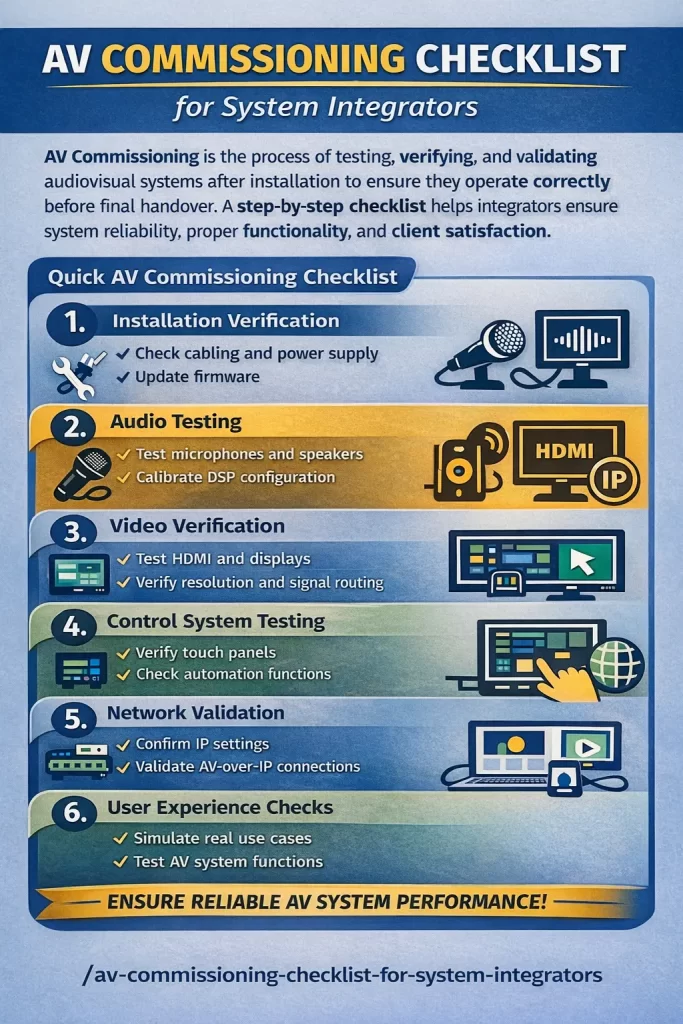
Step-by-Step AV Commissioning Checklist

Below is a simplified AV commissioning workflow used by professional system integrators.

AV Commissioning StepKey Tasks
Installation VerificationCheck cabling, power connections, firmware updates
Audio TestingTest microphones, speakers, and DSP configuration
Video VerificationValidate HDMI signals, displays, and resolution
Control System TestingTest touch panels and automation functions
Network ValidationVerify IP settings and bandwidth usage

This AV installation verification checklist ensures that all technical aspects of the system are validated before client handover.

Why AV Commissioning Matters for Businesses

Organizations invest significant resources into AV infrastructure, but without proper commissioning, systems may fail during important meetings or presentations.

Proper AV Commissioning ensures that AV systems perform reliably from day one.

Key reasons commissioning matters include:

  • Detects configuration errors before deployment
  • Improves audio and video performance
  • Ensures proper integration between AV devices
  • Reduces post-installation troubleshooting
  • Provides documentation for system validation

For enterprises and commercial facilities, commissioning is essential to ensure technology investments deliver real value.

Why AV Commissioning Is Critical

Industry reports indicate that over 35% of AV system issues occur due to configuration errors discovered after installation.

These problems often result from incomplete testing during the deployment phase.

Without a proper commercial AV commissioning process, organizations may experience:

  • System downtime during meetings
  • Poor audio performance
  • Display switching issues
  • Network connectivity failures

By following a structured AV integrator commissioning workflow, integrators can identify and resolve issues before the system goes live.

This proactive approach significantly improves system reliability and user satisfaction.

Best Practices for AV Commissioning

Successful commissioning requires a structured approach and attention to detail.

Below are key best practices used by professional system integrators.

1. Verify Installation Before Testing

Before starting AV Commissioning, confirm that the installation phase is complete.

Verify:

  • Equipment mounting and rack installation
  • Signal cable connections
  • Network configuration
  • Device firmware versions

Completing this AV installation verification checklist ensures that the system is ready for testing.

2. Perform Comprehensive Audio Testing

Audio performance is one of the most important aspects of an AV environment.

During AV system testing, integrators should verify:

  • Microphone inputs
  • Speaker outputs
  • DSP processing
  • Audio signal routing
  • Echo cancellation and audio levels

Proper calibration ensures clear communication in meeting rooms and collaboration spaces.

3. Validate Video Signal Routing

Video testing confirms that all displays and switching systems function correctly.

Key verification tasks include:

  • Testing HDMI connections
  • Checking AV-over-IP video streams
  • Verifying display resolution
  • Testing video switching between sources

This step ensures seamless presentations and video conferencing experiences.

4. Test Control System Functionality

Modern AV environments rely on centralized control systems that allow users to manage multiple devices through a single interface.

Control system testing should verify:

  • Touch panel responsiveness
  • Automation scripts
  • Device communication
  • User interface navigation

A properly tested control interface ensures that users can operate the system easily.

5. Validate Network Infrastructure

Many modern AV environments operate on IP-based networks.

Network validation includes:

  • Verifying IP address configuration
  • Testing network bandwidth
  • Checking AV-over-IP streaming performance
  • Confirming VLAN configuration

A stable network infrastructure is essential for modern AV deployments.

Benefits of AV Commissioning for Businesses

Organizations that prioritize AV Commissioning gain several advantages.

Reliable System Performance

Well-tested systems operate consistently and reduce technical disruptions.

Improved Collaboration

Clear audio and reliable video improve meeting experiences.

Reduced Maintenance Costs

Early detection of configuration issues prevents costly repairs later.

Faster Troubleshooting

Commissioning documentation helps support teams diagnose issues quickly.

Higher ROI on AV Investments

Businesses gain the full value of their AV infrastructure when systems operate efficiently.

Common AV Commissioning Challenges

Even experienced system integrators may face challenges during the commissioning process.

Network Configuration Errors

Incorrect network settings can prevent AV devices from communicating.

Solution:
Collaborate with IT teams and validate network configuration early.

Audio Calibration Problems

Poor DSP tuning can cause uneven sound distribution.

Solution:
Use professional calibration tools during the AV system testing checklist phase.

Device Integration Issues

Equipment from different manufacturers may require additional configuration.

Solution:
Verify compatibility and update firmware before commissioning.

Future Trends in AV Commissioning

The AV industry continues to evolve as new technologies emerge.

Future commissioning processes will likely include:

AI-Based System Diagnostics

Artificial intelligence may automatically detect system performance issues.

Remote AV Monitoring

Cloud-based platforms allow integrators to monitor system health remotely.

AV-over-IP Expansion

More AV environments are transitioning to network-based infrastructure.

Automated Commissioning Tools

Future tools may automate parts of the commercial AV commissioning process, making testing faster and more accurate.

System integrators who adopt these technologies will gain a competitive advantage.

Conclusion

Installing AV equipment is only part of a successful AV project. Ensuring that every component functions correctly is what truly determines system performance.

AV Commissioning provides the final verification that confirms audio performance, video quality, network connectivity, and control system functionality.

By following a structured step-by-step AV commissioning checklist, system integrators can identify configuration issues early and deliver reliable AV systems to their clients.

For businesses, this means fewer technical problems, smoother collaboration, and greater confidence in their AV technology investments.

As AV systems become more complex and network-driven, professional commissioning will remain a critical step in successful system integration.

FAQ

What is an AV commissioning checklist?

An AV commissioning checklist is a structured process used by system integrators to test and verify audiovisual systems before deployment.

Why is AV commissioning important?

It ensures system reliability, improves audio and video performance, and prevents technical issues after installation.

When should AV commissioning be performed?

AV commissioning should take place after installation but before the final system handover to the client.

AV Commissioning Checklist for System Integrators Read More »

AV System Integration: Building Reliable, Connected AV Environments

Across many organisations, audio-visual technology has become essential to everyday communication. Whether we are hosting a quick team catch-up or an important client presentation, we all expect the room to just work. No complicated controls, no technical delays—just a smooth, professional experience. With AV system integration, we connect displays, microphones, speakers, cameras, and control systems into one simple setup, so we can focus on the meeting instead of the technology.

What Is AV System Integration?

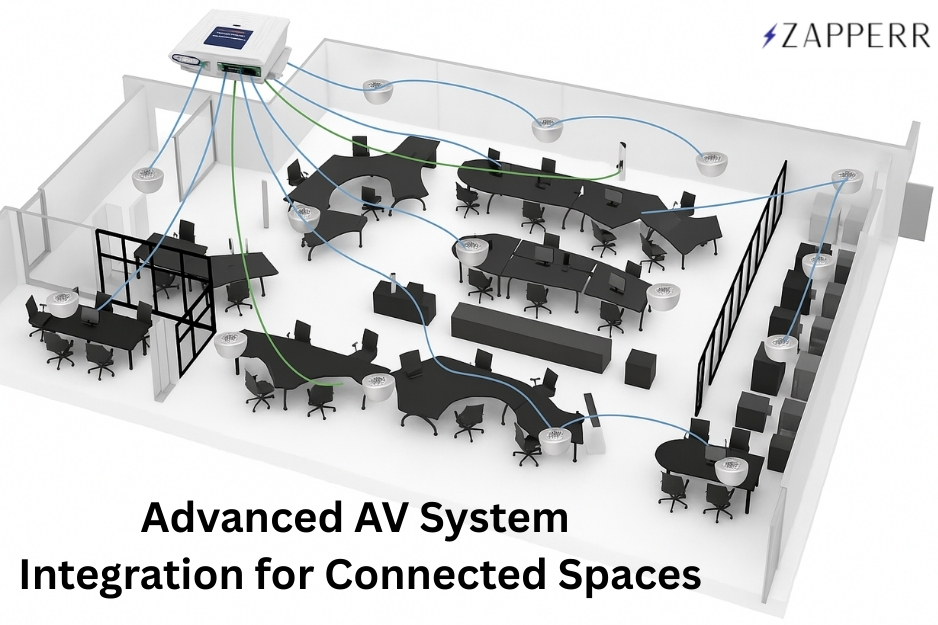
AV system integration is the process of designing, installing, and configuring different audio-visual components so they function as one unified system. Instead of operating multiple devices independently, we integrate everything through a central control and signal flow structure.

A properly integrated AV system ensures that displays, microphones, cameras, speakers, and control interfaces communicate efficiently, delivering consistent performance and a better user experience.

Why AV Integration Matters

Without proper integration, AV systems often become complicated, unreliable, and difficult to operate. Users may struggle with multiple remotes, inconsistent audio, or devices that fail to connect during meetings.

We solve these challenges by designing and integrating systems that:

  • Simplify system control
  • Ensure compatibility between devices
  • Improve audio and video quality
  • Reduce technical issues during meetings
  • Enhance overall user experience

Our integrated solutions are designed to support daily operations, making collaboration smoother and more efficient.

Key Components of an Integrated AV System

A typical AV integration project involves several interconnected components that we design and configure to work together seamlessly.

Displays and Visual Systems

  • Large format displays
  • Video walls
  • Projectors
  • Interactive screens

Audio Systems

  • Ceiling or wall-mounted speakers
  • Wireless and wired microphones
  • Digital signal processors (DSP)

Video Conferencing Equipment

  • PTZ or fixed cameras
  • Conferencing platforms like Zoom or Teams
  • Room scheduling displays

Control Systems

  • Touch panels
  • Wall controllers
  • Mobile or tablet-based interfaces

We integrate these components through a central control system to ensure simple operation and reliable performance.

Our AV Integration Process

We follow a structured integration process to deliver systems that are reliable, user-friendly, and ready for everyday use.

1. Consultation and Needs Analysis

We assess your space, technical requirements, and user needs to design the right AV solution.

2. System Design

We create a detailed AV design, including equipment selection, signal flow, and control logic.

3. Installation

Our team installs, mounts, and connects all equipment according to the design plan.

4. Programming and Configuration

We program control systems, audio processing, and video routing to ensure smooth operation.

5. Testing and Commissioning

We test, calibrate, and verify the system to ensure it performs exactly as intended.

6. Training and Handover

We train your team so they can operate the system confidently.

This structured approach helps us deliver consistent performance and long-term reliability.

Where We Deliver AV Integration

We provide AV integration services for a wide range of environments, including:

  • Corporate meeting rooms
  • Boardrooms
  • Training facilities
  • Classrooms and lecture theatres
  • Auditoriums and event spaces
  • Control rooms
  • Retail and hospitality venues

For each environment, we design a tailored solution that meets the specific operational needs of the space.

Benefits of Working With Zapperr AV

Improved Reliability

We test and calibrate systems to minimise technical issues.

Simplified User Experience

We create centralised control interfaces that are easy for anyone to use.

Better Audio and Video Quality

We configure systems to deliver clear sound and sharp visuals.

Future-Ready Design

We build scalable systems that can grow with your organisation.

Reduced Support Costs

Our well-integrated systems require fewer troubleshooting visits.

Why Choose Zapperr AV for AV System Integration

At Zapperr AV, we focus on reliability, simplicity, and performance. Our team works closely with clients to understand their needs and create systems that support everyday operations.

Our AV integration services include:

  • AV system design and consultation
  • Professional installation
  • Control system programming
  • Audio and video calibration
  • System commissioning and testing
  • User training and ongoing support

We create AV environments that are easy to operate, dependable, and built for long-term performance.

Build a Seamless AV Environment

A professionally integrated AV system ensures that all components work together smoothly, providing consistent performance and a better experience for users.

Contact Zapperr AV today to discuss your AV system integration requirements and let us help you create a reliable, future-ready AV environment.

AV System Integration: Building Reliable, Connected AV Environments Read More »

Why Australian Businesses Choose Expert AV Commissioning for Success

In Australia’s dynamic business environment, expert AV commissioning stands out as a game-changer for audio-visual systems in corporate offices, educational institutions, and event spaces. This vital process entails comprehensive on-site testing, real-world simulations, and meticulous fine-tuning to ensure every element—from displays and microphones to conferencing tools—operates flawlessly. Zapperr AV’s certified team transforms complex installations into seamless, user-friendly solutions, allowing businesses to prioritize growth over technical glitches.

Expert audio visual commissioning services go beyond installation—they involve rigorous on-site testing, real-world simulations, and precise fine-tuning to validate system performance. With a certified team, Zapperr AV transforms complex technology setups into intuitive, reliable solutions, allowing Australian businesses to stay focused on productivity instead of troubleshooting.

Key Reasons for Choosing Experts

  • Unmatched Reliability : Commissioning identifies and resolves issues before launch, preventing downtime during critical presentations in high-pressure settings like Sydney boardrooms or Melbourne training facilities.

  • Cost Efficiency : Early detection slashes future repair expenses, crucial amid Australia’s escalating project budgets, yielding superior long-term returns.

  • Seamless Integration : AV systems harmonize with existing IT setups, powering hybrid work models essential for post-pandemic productivity across Perth, Brisbane, and beyond.

Zapperr AV simulates everyday scenarios to optimize audio precision and video synchronization, tailored for diverse Australian venues including healthcare and corporate fit-outs. Clients experience heightened satisfaction, fewer support tickets, and elevated collaboration—turning AV into a strategic advantage. By partnering with commissioning experts, Aussie firms future-proof their tech investments effortlessly.

Why Australian Businesses Choose Expert AV Commissioning for Success Read More »

Scroll to Top